
Storm debris cleanup checklist
Wait until the area is safe, photograph damage, and separate clean yard debris from household material. Stop if you see downed lines, unstable structures, floodwater, chemicals, or unknown containers.
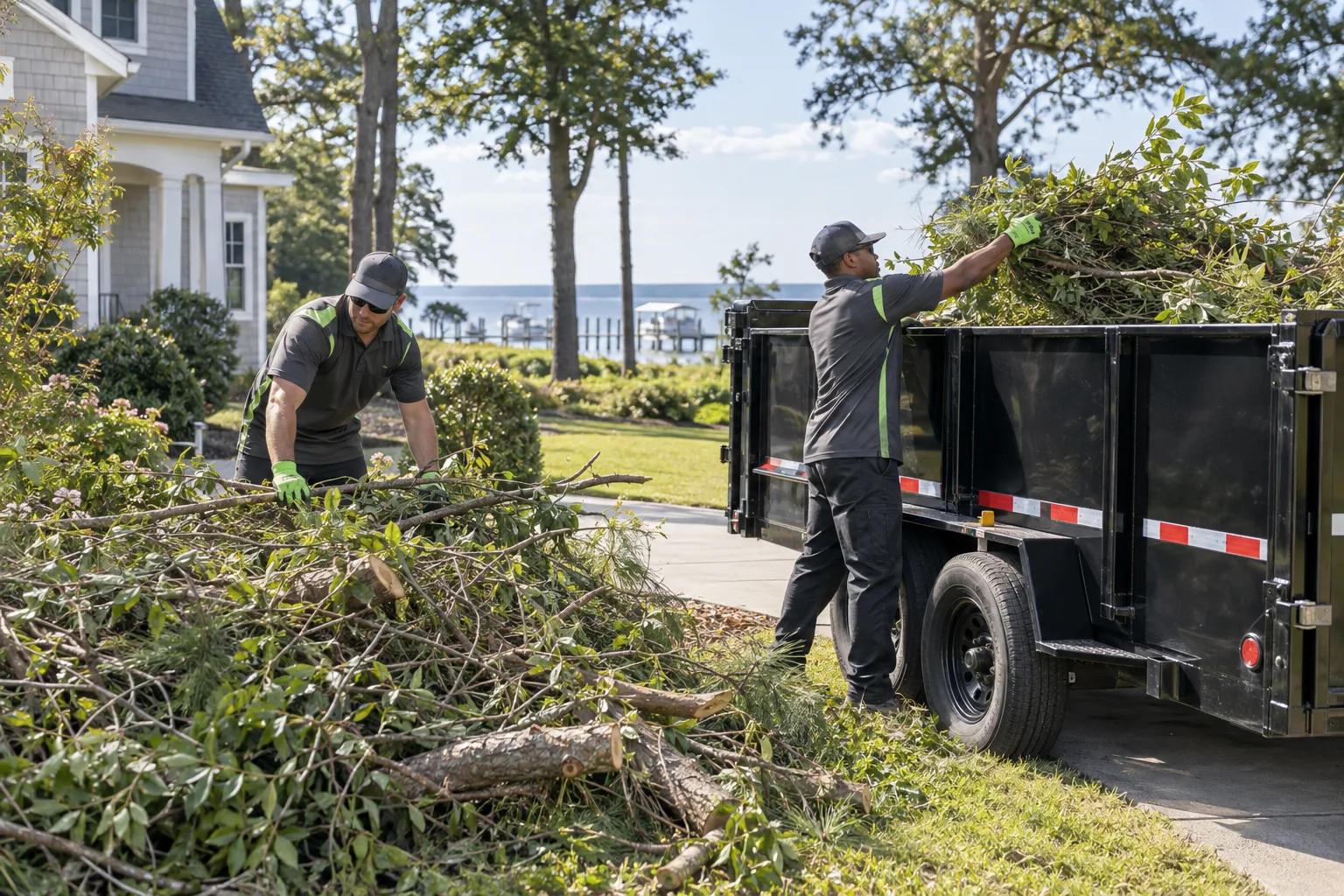
Do a hazard pass first
Look from a safe distance before moving anything. Floodwater can hide sharp debris, unstable ground, sewage, chemicals, and electrical hazards. NIOSH recommends task-specific protective equipment and warns that ordinary sneakers do not protect against puncture, contamination, or crushing hazards during flood cleanup. NIOSH flood cleanup guidance (reviewed March 7, 2023; retrieved September 22, 2026; United States).
Stop and call the right authority when you see
- Downed or low power lines
- A leaning tree or hanging limb under tension
- A sagging roof, wall, deck, or shed
- Standing floodwater near electrical equipment
- Fuel, pesticides, solvents, batteries, or pressurized containers
- Possible asbestos or lead-containing debris
Sort by destination
Keep branches and limbs separate from furniture, appliances, bagged household debris, and construction material. Chesapeake requires separate household and yard-debris piles for city bulk collection and excludes construction debris, soil, and several landscape materials. City of Chesapeake bulk trash rules (retrieved September 22, 2026; Chesapeake, Virginia).
Photograph and measure the pile
Take wide photos from more than one angle and note the longest branches, trunk diameter, access width, and distance from the street. Do not cut material near power lines or enter an unstable area to improve a photo.
Choose the service
City collection may work for eligible separated piles within current limits. A tree service is the right call for cutting, hanging limbs, or unstable trees. A junk-removal crew can haul accessible, already-down material after hazards are cleared.
See storm debris removal or send EcoClear the safe-to-photograph details.